Monthly Archives: October 2026

Hauled Out in Annapolis

I got going south at 9 am the next morning headed for Annapolis after first calling Jabin Yacht Yard and setting an appointment to have Phywave hauled out first thing on Tuesday morning. From Ford Landing it was another full day of motoring with winds up to 15 kts on the bow retarding my progress and only weak currents that both helped and hurt my progress. 

I arrived in the not so great anchorage off Horn Point in Annapolis at around 5 pm, not great because it’s rolly and exposed though the anchor holding is ok. Power boats sometimes don’t obey the “no wake” rules and that adds more rolling around. There were several other boats anchored there, many launching their dinghies to go into town while others chose to taxi the water taxi that will pick you up at your boat. I didn’t bother with that since I’d be ashore soon enough.

My haul out date was Tuesday, October 6, but I could bring the boat over the afternoon before and tie it to one of the long docks alongside the chutes where the travelifts operate so it would be ready to haul first thing in the morning. They wanted it stern-in but without the bow thrusters working, there wasn’t much room for me to rotate the boat so the Jabin crew did that by hand. One reason I like the Jabin yard is they have plenty of people on the job and they know what they’re doing. Unlike Herrington Harbour North (HHN) where I was earlier this year, they will commit to a specfic date to haul or launch a boat. HHN will only commit to “week of” – not very user-friendly. HHN also requires headsails on furlers to be removed before they will put the boat in the yard for fear the sails might unfurl with a strong wind and pull the boat over. Completely unnecessary, as long as the furled sail is held tight with several wraps of the sheets. That sensible approach to headsails is OK at Jabin.

At a little after 8:30 am they were lifting Phywave out of the water and by 9:30 it was in place and blocked, ready for me to start down my list of more than 50 things I need to fix, maintain, buy, or get rid of. I plan to be here until October 30 to get as much of that done as possible. I plan to fly back home on the 31st.

Reflecting on this summer’s sailing, one word describes it: a fiasco. I had to work through multiple serious boat problems, some of which were due to my own complacency and lack of preparation. Having gotten past those, I was fueled and a day away from leaving Hammerfest and starting across the Barents Sea to the Northern Sea Route when the Russians effectively cancelled our permits to transit their Arctic waters. I basically spent my summer sailing to the northern end of Norway and back – not exactly a significant accomplishment. Not much to point to for all the time and effort I put into it. I guess I did sail north of the Arctic Circle so that’s about the only minor accomplishment I can extract from this summer’s sailing.

As for next year, I have the winter to decide what I will do. There are now new moving parts in Russia which sill affect another attempt at an Arctic circumnavigation, and which are too complicated to explain here but which will raise the risk level. It remains fo be seen how it might shake out in the coming months.
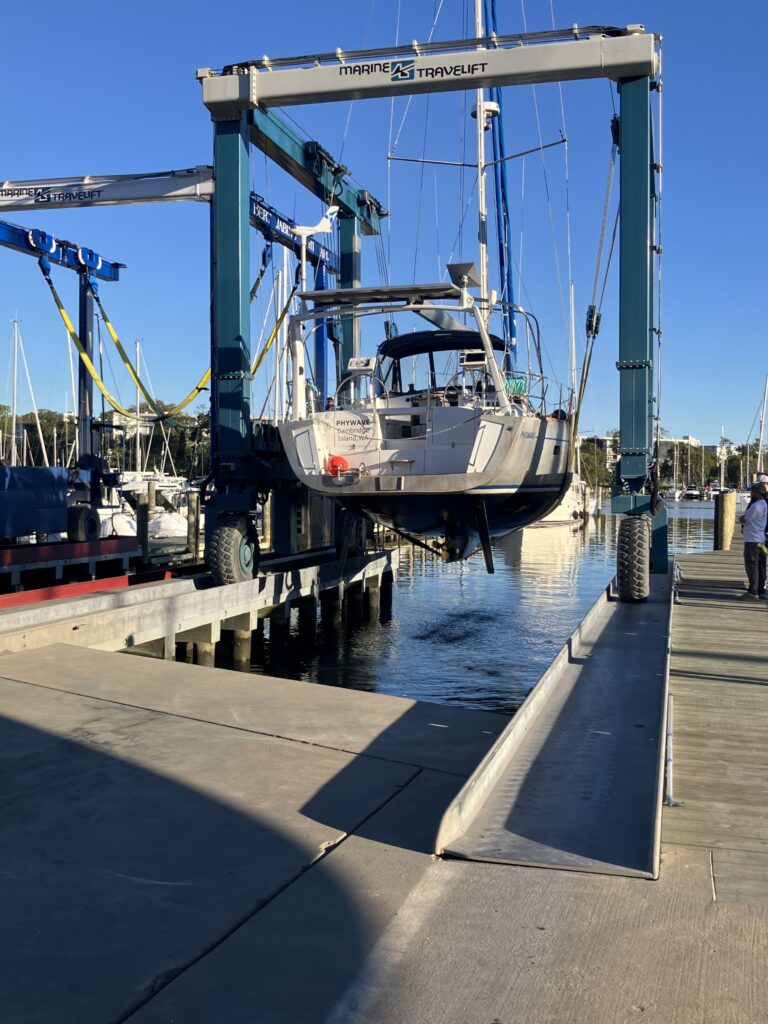
Phywave coming out of the water
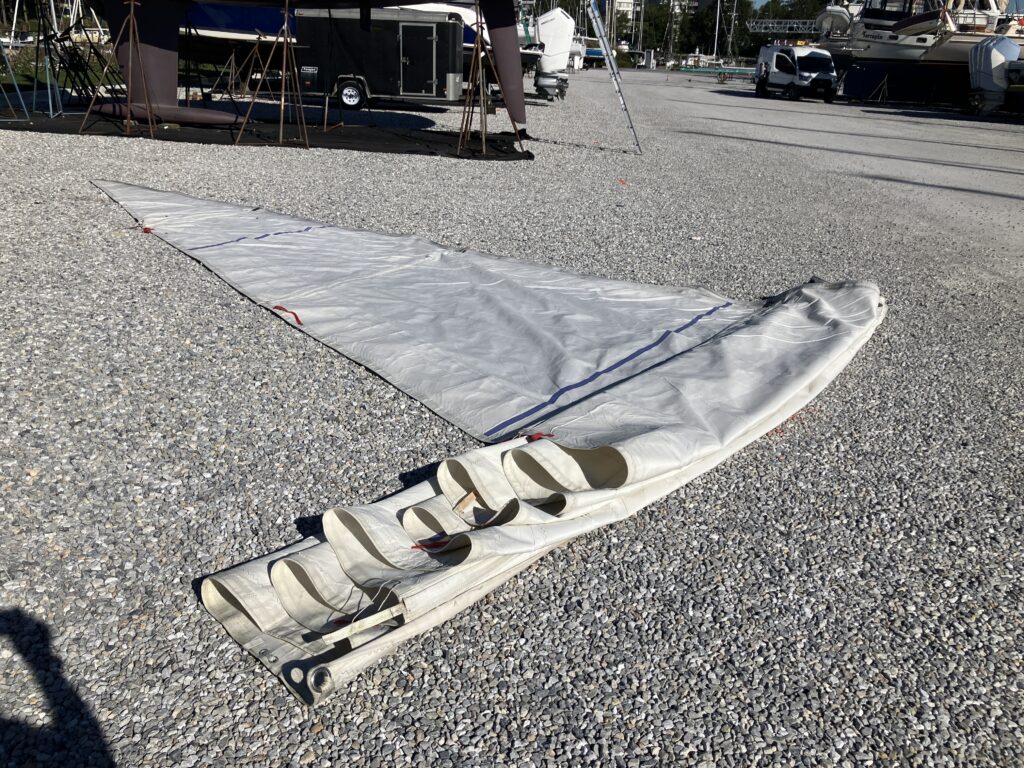
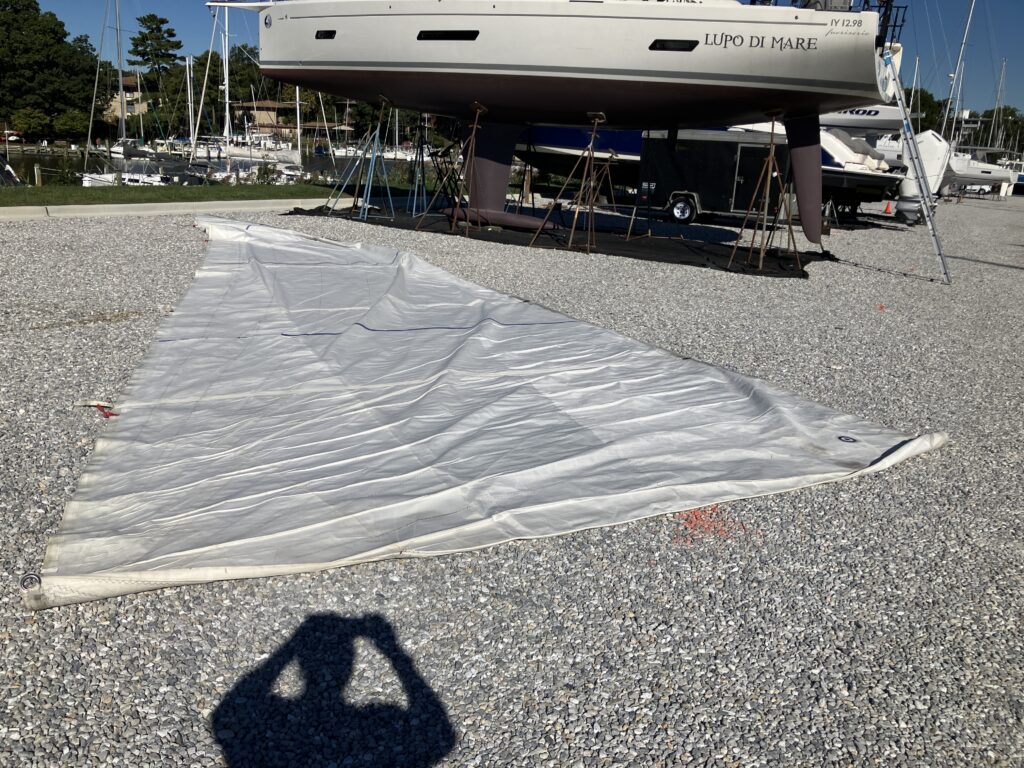
After pulling the mainsail off the furling boom, I laid it out to flake it. Fortunately, I had a large empty parking area by the boat where I could do that.
Flaking a big sail solo takes time with a lot of walking back and forth to get the folds even.

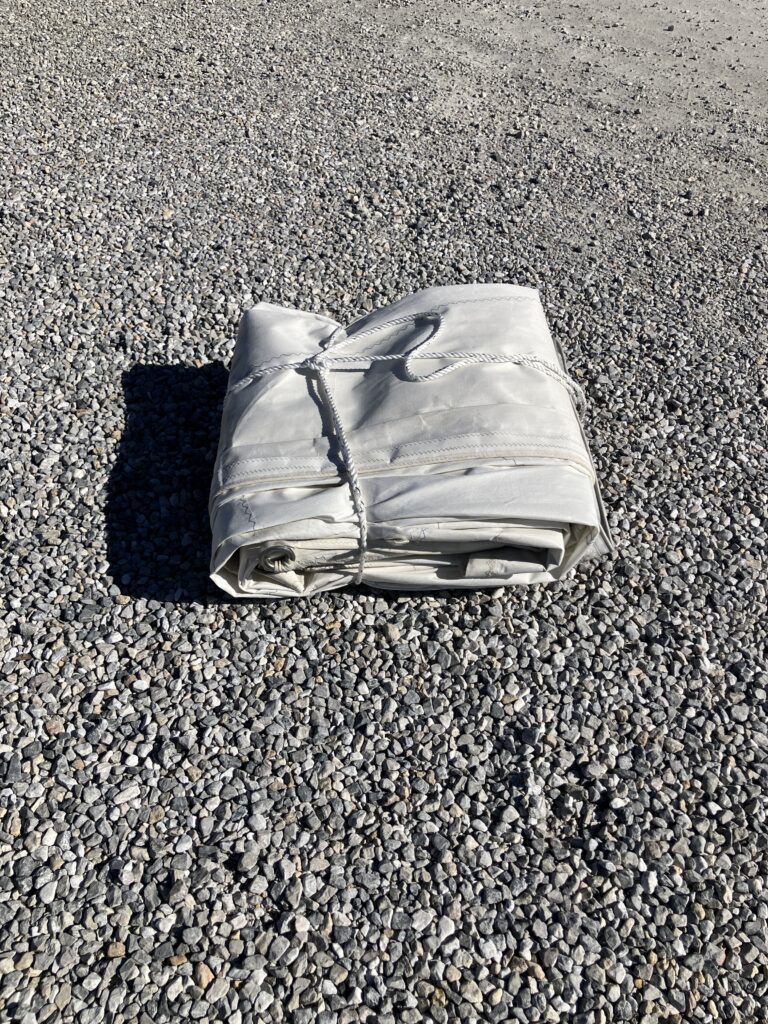
Finally finished and tied up in a convenient bundle.

Back in Chesapeake Bay

After the Nor’easter subsided, I left the Sandwich Marina at about 11 am local time in Monday, September 28, to coincide with the start of the ebb current flowing westward in the Cape Cod Canal. There are a couple of fixed high bridges across the canal that are easy to pass under but also a vertical lift railroad bridge that is high when in the raised position (most of the time) but impassible by boats in the canal when lowered to let a train pass over. The train schedules are a little random so it’s hard to know when the bridge may be down. I tried to call the bridge control on the VHF before leaving the marina but got no answer. Once I got in the canal, there were tugs and other commercial traffic which indicated to me the railroad bridge was up and wouldn’t be an issue.

With an assist from the strong current, motoring through the canal to Buzards Bay was quick. As soon as I had some open water to work with I started looking for some wind but true to the forecast, the winds were very light and in the wrong direction. South of Buzzards Bay I finally got some useful wind and could sail through the night.

The next few days forecast pretty much said dead calm or light winds on the nose so I started motoring my way to Breakwater Harbor on the opposite side of the Delaware River delta from Cape May. I had identified it as the most convenient place to wait for the flood current north in the river that would start the next morning.

Curiously, getting close to the harbor I noticed the halyard on my mainsail was loose and flapping in the wind. Normally, I’d tighten it so it pulls on the head of the sail that’s securely furled inside the furling boom with the furling line locked down. I tried to tighten the halyard again but it started raising the sail, now above the first batten, which should never happen. It was then I noticed the furling line was slack. After further investigation I realized the line had snapped at the furling drum at the aft end of the boom.  It was a serious problem since I now had no way to roll in the sail the was already partly pull out. If wind had caught that raised piece of sail, it could have unrolled the entire mainsail since there was nothing to stop the furling drum from turning.

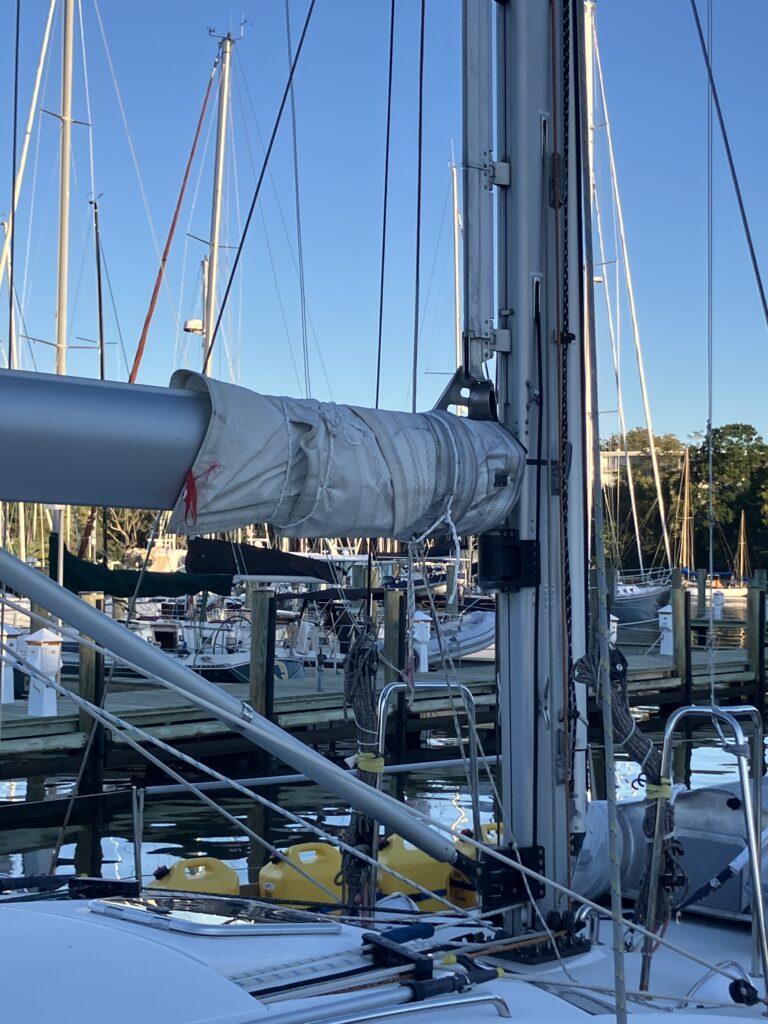
As soon as I was anchored in Breakwater harbor, I pulled that deployed piece of sail down, wrapped it around the boom, and lashed it there so the wind couldn’t catch it. It was my only choice since replacing the furling line is not a simple thing on that boom. I’d have to make that repair after the boat was hauled out back in Annapolis. If I fould any wind for sailing, I’d have to do it with the headsails alone. As it turned, there really wasn’t much wind so the next two days so getting back to Annapolis were all motoring.

At about 7 am the next morning, October 1, pretty much all the boats in the harbor pulled up their anchors and headed north with the same objective: to reach the east entrance of the Chesapeake- Delaware (C&D) Canal when the current is flowing westward to the Chesapeake Bay. It made a random procession of sailboats (monohulls and catamarans) and power boats heading north, with the occasional commercial container ship or tanker adding to mix and causing the rest of use to move to the side of the main channel to give them room to pass by. 

It was a long boring slog with my engine running at 2100 rpm, faster than I normally motor,but I wanted to make sure I got through the canal and to place I picked to anchor for the night in the north end of Chesapeake Bay. With the current assist, I saw my speed over ground (water) exceed 9 knots at times.

I turned west into the C&D canal around 2:45 pm and with the further current assist there made it to the anchorage I had picked out in the north end of Chesapeake Bay by Ford Landing at around 5:30 pm. I always try to time my arrival in a new place for daylight hours though I have anchored at night in new places where I can’t see much – it’s a little spooky. Happy to be back in Chesapeake Bay, I had a calm, restful night at this anchorage along with 3 other boats.

The top portion of the mainsail wrapped around the boom after the furling line broke
Sunset from the anchorage at Ford Landing